A siding replacement usually starts with one practical question: when comparing vinyl siding vs fiber cement, which one will actually hold up better on your home in the Chicago suburbs? That answer depends on your budget, the age and style of your home, how much maintenance you want to take on, and how long you plan to stay in the property.
Both materials are popular for good reason. Vinyl siding is cost-effective, low maintenance, and available in a wide range of colors and profiles. Fiber cement is heavier, more premium in appearance, and known for strong performance in harsh weather. For many homeowners, the right choice is not about picking the "best" material in general. It is about picking the best fit for your specific property and priorities.
Vinyl siding vs fiber cement: the biggest differences
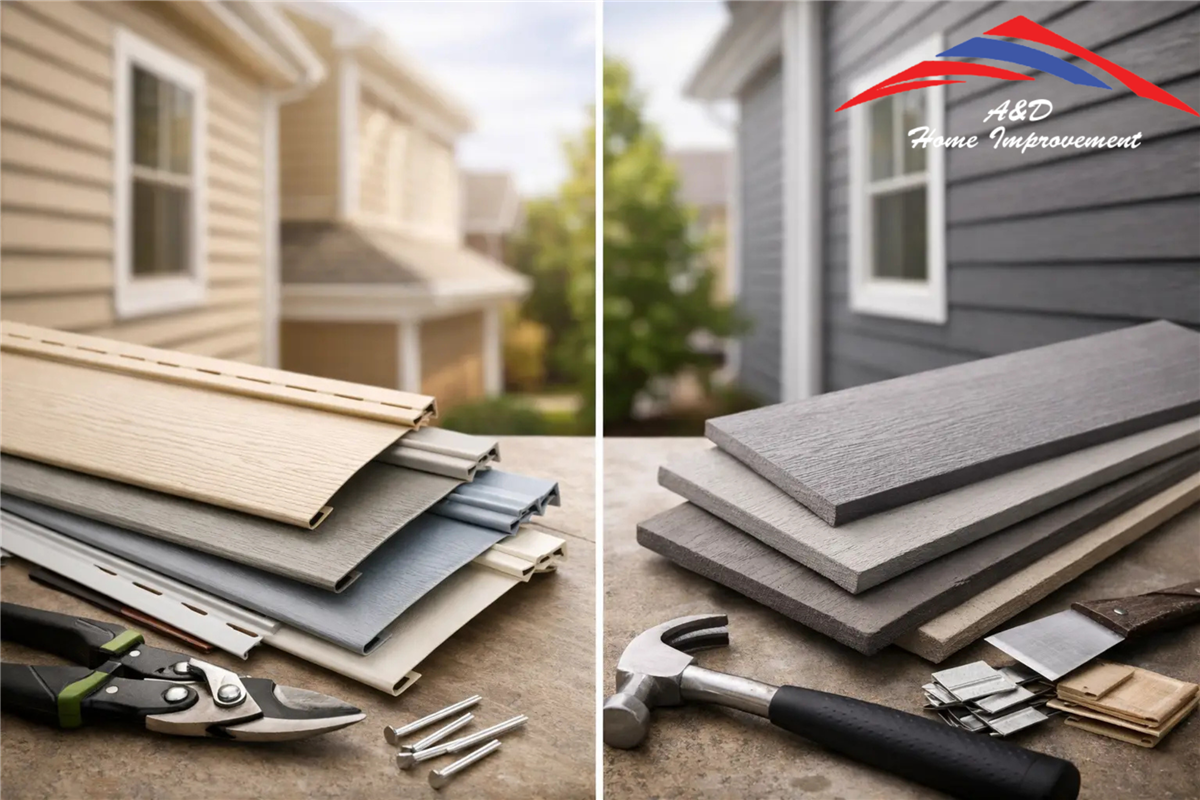
The clearest difference is material makeup. Vinyl siding is made from PVC and is designed to be lightweight, flexible, and relatively easy to install. Fiber cement is a dense product made from cement, sand, and cellulose fibers, which gives it a more solid feel and a different level of impact and fire resistance.
That difference affects almost everything else, including cost, installation method, maintenance needs, and appearance. Vinyl tends to be the more budget-friendly option up front. Fiber cement typically requires a larger initial investment, both for material and labor, because it is heavier and more demanding to install correctly.
If your main goal is a clean exterior upgrade without stretching the budget, vinyl often gets strong consideration. If your main goal is long-term durability and a more substantial, wood-like appearance, fiber cement usually moves to the top of the list.
Cost matters, but so does total value
For many property owners, price is the first filter. Vinyl siding generally costs less than fiber cement, which makes it attractive for larger homes, investment properties, and homeowners balancing multiple exterior upgrades at once. If siding, roofing, gutters, and windows are all on your radar, lower siding costs can create room in the budget for other important work.
Fiber cement usually comes with a higher installed cost. The boards are heavier, installation is more labor-intensive, and the skill level required is higher. That does not automatically make it overpriced. It means the value calculation changes. Homeowners often choose fiber cement because they want a more upscale look, stronger resistance to certain types of damage, and the confidence that comes with a premium product installed to manufacturer standards.
Financing can also shape this decision. A higher-end siding system may be more realistic when the project is structured around monthly payments rather than a full cash outlay.
How each material handles Illinois weather
In the Chicago suburbs, siding has to deal with freezing winters, humid summers, heavy wind, hail, and rapid weather shifts. That makes climate performance more than a marketing talking point.
Vinyl siding performs well in many conditions, especially when installed properly with allowance for expansion and contraction. It resists moisture and does not require painting, which is a major advantage for homeowners who want minimal upkeep. However, extreme impact from hail or flying debris can crack vinyl panels, and lower-grade products may become brittle over time.
Fiber cement is often chosen for its toughness in demanding climates. It does not warp the way some materials can, it handles temperature swings well, and it offers strong resistance to moisture, pests, and fire. In storm-prone areas, many homeowners like the added sense of solidity that comes with fiber cement.
That said, no siding material is completely storm-proof. Installation quality is a major factor. Even an excellent product can underperform if flashing, fastening, trim details, and moisture management are handled poorly.
Appearance and curb appeal
If curb appeal is a major part of your decision, the conversation becomes more personal. Vinyl siding has improved significantly over the years. Better product lines offer richer colors, improved thickness, and more realistic textures than older generations of vinyl. For many homes, especially traditional suburban styles, vinyl can look clean, attractive, and entirely appropriate.
Fiber cement often stands out for its finished look. It is commonly selected by homeowners who want sharper lines, deeper wood-grain texture, and a more custom appearance. On certain architectural styles, especially higher-end homes or homes with detailed trim packages, fiber cement can deliver a more refined exterior.
Color strategy matters too. Vinyl color is baked into the material, so scratches are often less noticeable. Fiber cement is typically factory-finished or painted, which gives flexibility but may eventually require repainting depending on the product and exposure conditions.
Maintenance and long-term upkeep
One of vinyl siding's strongest selling points is low maintenance. It does not need repainting, and routine care usually comes down to periodic cleaning. For homeowners who want a straightforward exterior with fewer ongoing tasks, that is hard to ignore.
Fiber cement is also considered a durable, low-maintenance option, but it is not maintenance-free. Depending on the finish and age of the installation, repainting or touch-up work may be part of the long-term ownership picture. The trade-off is that many homeowners accept that extra upkeep in exchange for appearance and durability.
If your priority is keeping exterior maintenance as simple as possible, vinyl has an edge. If you are comfortable with occasional upkeep for a more premium finish, fiber cement may still be the better fit.
Installation quality is not optional
This is where many siding comparisons fall short. Homeowners often focus only on the product, but installation quality has a major impact on performance, warranty protection, and service life.
Vinyl siding needs correct spacing, fastening, and trim integration so it can move with temperature changes without buckling or distorting. Fiber cement requires even more precision. Because it is heavier and installed differently, poor workmanship can lead to moisture issues, cracking, or reduced lifespan.
That is why contractor credentials matter. Certified installation standards, manufacturer-backed systems, and a clear project process can make the difference between a siding replacement that lasts and one that becomes a source of callbacks and repairs.
Which option is better for resale?
Both vinyl and fiber cement can improve resale appeal when the existing siding is worn, faded, or storm-damaged. A fresh exterior signals that the property has been maintained, and that can help buyers feel more confident.
Vinyl often delivers strong value because the upfront investment is lower. It can refresh the appearance of a home quickly and cost-effectively. Fiber cement may appeal more strongly to buyers who recognize premium exterior materials and are willing to pay for a higher-end look.
The neighborhood matters here. In some areas, vinyl is the standard and fits the market perfectly. In others, especially where homes trend more upscale, fiber cement may align better with buyer expectations.
Vinyl siding vs fiber cement for your home
If you want the short answer, vinyl siding is usually the practical choice for homeowners who want affordability, low maintenance, and reliable performance. Fiber cement is usually the stronger choice for homeowners who prioritize premium curb appeal, durability, and long-term exterior value.
But there are situations where the answer shifts. If your home has a more custom architectural style, fiber cement may better match its design. If you are working within a tighter budget or replacing siding after storm damage while managing insurance and other repairs, vinyl may be the more efficient path. If you expect to stay in the home for many years, investing more now can make sense. If you plan to sell sooner, cost-to-value balance may matter more than upgrading to the highest-end material.
For Illinois properties, it is also smart to think about the whole exterior system, not just the siding panels. Trim, soffit, house wrap, moisture protection, and proper ventilation all affect results. A strong siding project is not just about what you see from the street. It is about how the wall assembly performs season after season.
At A&D Home Improvement, that is exactly how we approach exterior remodeling - with product knowledge, certified installation standards, and recommendations based on the property, the budget, and the weather conditions your home actually faces.
The best siding choice is the one that gives you confidence every time you pull into the driveway and every time the forecast turns rough. If you are weighing vinyl against fiber cement, the smartest next step is a project-specific evaluation that looks at your home, not just the brochure.
Subscribe to A&D Home Improvement's Blog