A gutter system rarely fails all at once. More often, leaves collect near an outlet, water begins spilling over one section, and a small drainage issue turns into stained siding, washed-out landscaping, or moisture near the foundation. Knowing how to maintain seamless gutters gives Chicago-area property owners a practical way to prevent those expensive problems before harsh weather exposes them.
Seamless gutters are built with fewer joints than sectional systems, which reduces common leak points. They still need regular attention, especially in the Chicago suburbs, where spring rain, summer storms, falling leaves, ice, and snow can all affect drainage. A consistent maintenance routine protects the gutter system, but it also supports the roof, siding, foundation, and exterior finishes around it.
Start With a Seasonal Gutter Check
For most homes, gutters should be checked at least twice a year: once in late spring and again after the majority of leaves have fallen in autumn. Properties with mature trees, pine needles, or heavy storm exposure may need inspections every few months.
The best time to inspect is after a moderate rainfall. You can see whether water is moving toward each downspout, identify areas where it overflows, and spot a downspout that is draining too slowly. Dry-weather cleaning is necessary, but a rain check reveals how the system actually performs when it matters.
Do not wait for visible water damage to schedule an inspection. Water lines on fascia boards, peeling paint, soil erosion below roof edges, and recurring puddles near the home are all signs that drainage needs attention.
Remove Debris Before It Creates a Blockage
Leaves, seed pods, roof grit, twigs, and shingle granules tend to settle in low points and around downspout openings. Even a small buildup can hold moisture against the gutter and stop water from moving freely. Over time, the extra weight can stress hangers and pull the gutter line out of position.
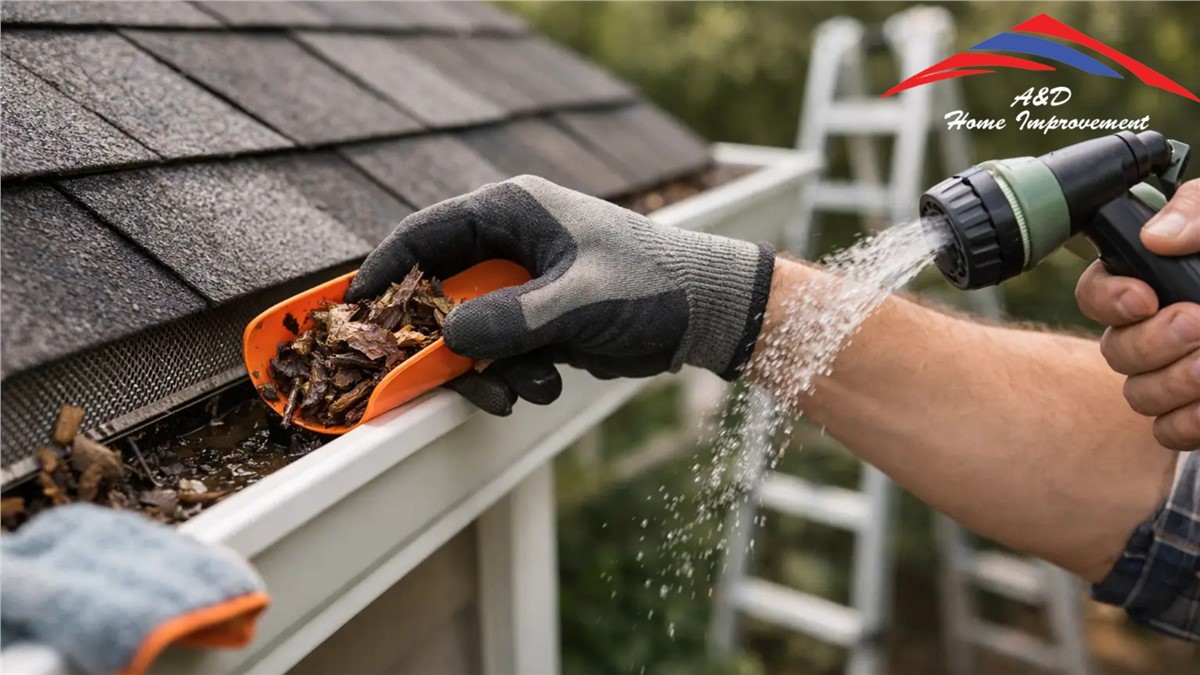
Use a stable ladder, work with a second person when possible, and wear gloves and eye protection. Remove debris by hand or with a plastic scoop, taking care not to scratch the gutter finish. Avoid leaning a ladder directly against the gutter itself. The pressure can dent aluminum or loosen its attachment to the fascia.
After clearing larger debris, rinse the channels with a garden hose. Start at the end farthest from the downspout and work toward the outlet. The water should flow steadily without pooling. If it slows or backs up at the downspout, the obstruction may be inside the vertical pipe rather than the gutter channel.
Clear Downspouts Completely
A clean-looking gutter can still overflow if its downspout is clogged. Flush the downspout with a hose and watch for strong discharge at the bottom. If water does not pass through, disconnect the lower elbow if accessible and remove the blockage carefully. A plumber's drain snake can help with a stubborn clog, but avoid sharp tools that could puncture thinner metal.
Check that each downspout extension directs water well away from the foundation. The ideal distance depends on lot grading and drainage conditions, but water should not be released beside the house. Extensions should remain secure, open, and pointed toward an area where runoff can drain safely without affecting walkways or neighboring properties.
Inspect the Gutter Line, Fasteners, and Corners
A properly installed gutter has a slight pitch toward the downspout. That slope is subtle, yet essential. If water remains standing after rinsing, the gutter may have shifted, settled, or pulled away from the fascia. Standing water adds weight, encourages corrosion, and can overflow during the next storm.
From the ground and ladder, look for sagging sections, loose hangers, gaps behind the gutter, bent areas, or joints that show staining. While the main trough of a seamless system is formed as one continuous piece, corners, end caps, outlet areas, and downspout connections still require inspection. Those are the places most likely to need resealing over time.
Small sealant failures can sometimes be repaired with a gutter-compatible sealant once the area is clean and dry. However, repeated leaks, widespread sagging, or separation from the fascia often indicate a larger installation or drainage issue. Caulking over a problem without correcting the slope, hanger spacing, or damaged fascia can delay the repair but will not solve it.
Keep the Roof Edge and Fascia in Good Condition
Gutters depend on a sound roof edge. When shingles are damaged, drip edge flashing is missing, or fascia boards are soft from rot, water may run behind the gutter instead of into it. That moisture can damage the roof deck, soffit, trim, and exterior wall assembly.
During maintenance, look for water marks behind the gutter, darkened wood, peeling paint, loose soffit panels, and shingle edges that appear worn or lifted. After hail or high-wind events, inspect from the ground for obvious changes and arrange a professional exterior assessment if you see damage. Storm-related issues can affect multiple parts of the exterior at the same time.
Do not rely on gutters to compensate for a failing roof edge. Gutters manage water after it leaves the roof. They cannot correct water that is being directed improperly by damaged roofing or flashing.
Maintain Gutter Guards, but Do Not Ignore Them
Gutter guards can reduce the amount of debris entering a system and make seasonal cleaning easier. They are especially useful on homes surrounded by deciduous trees. Still, no guard eliminates maintenance entirely.
Fine debris, roof grit, pine needles, and seeds can collect on top of certain guard styles. Water can also overshoot a poorly fitted guard during heavy rainfall. Check the guards for lifting, warping, gaps, and buildup along the roof edge. Brush off surface debris and make sure the guard has not separated from the gutter.
The right guard depends on the roof pitch, tree coverage, gutter size, and the type of debris around the property. A product that performs well beneath broadleaf trees may need more attention near pine trees. Proper fit and installation matter as much as the guard material itself.
Prepare for Chicago Winters Without Damaging the System
Winter maintenance starts before temperatures drop. Complete fall cleaning, secure loose downspouts, and confirm that runoff is moving away from the building. Clogged gutters that freeze can become heavy enough to damage fasteners, fascia, and roof edges.
Avoid chipping ice from gutters with hammers, axes, or sharp metal tools. These methods can dent the gutter, damage its finish, or create a safety risk. If ice dams repeatedly form along the roof edge, the issue may be connected to attic insulation, ventilation, heat loss, or roof conditions rather than the gutter alone.
In those cases, addressing the source of heat loss is more effective than treating the ice at the gutter line every winter. A professional inspection can determine whether insulation improvements, ventilation corrections, roofing repairs, or drainage adjustments are appropriate.
Know When to Call a Professional
Routine debris removal is manageable for many property owners, but not every gutter concern is a do-it-yourself job. Multi-story homes, steep rooflines, damaged fascia, recurring overflows, and suspected storm damage deserve professional attention. The risk of a ladder injury or an incomplete repair is rarely worth the savings.
A qualified exterior contractor can evaluate gutter pitch, hanger placement, downspout capacity, roof-edge flashing, and drainage around the foundation. This broader view matters because a gutter problem may be connected to siding, roofing, or grading conditions. A&D Home Improvement helps homeowners in the Chicago suburbs identify drainage concerns and recommend repairs or replacement work that fits the property and its long-term protection needs.
Keep a simple record of cleanings, repairs, and storm inspections. It makes recurring issues easier to track and gives you a clearer picture of when a targeted repair is enough and when the system needs a more complete solution. A few planned checks each year can keep rainwater where it belongs: moving safely away from your property.
Subscribe to A&D Home Improvement's Blog