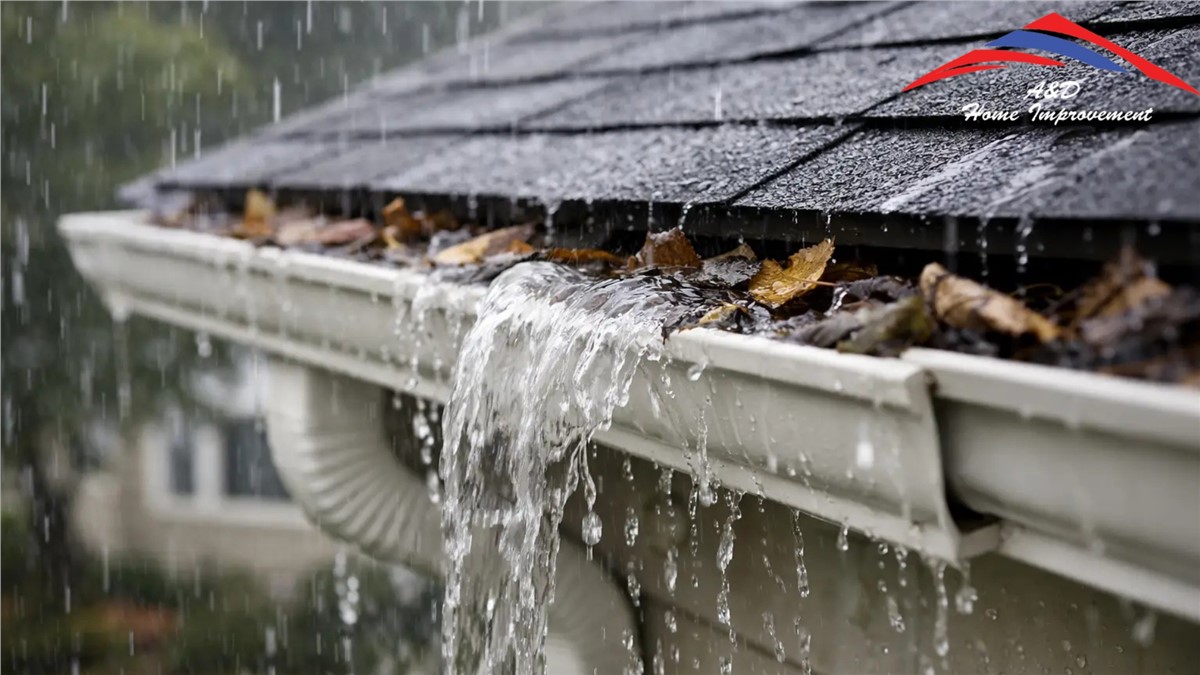
A hard Chicago-area rain can expose a gutter problem in minutes. Water spills over the edge, runs down siding, pools beside the foundation, and turns a simple leaf-clog issue into a property-protection concern. Proper gutter guards installation helps prevent that cycle, but only when the guard, gutter system, roofline, and drainage path work together.
For homeowners, gutter guards are not simply a way to avoid cleaning gutters. They are a practical upgrade designed to keep water moving away from the roof, fascia, siding, landscaping, and foundation. The quality of the installation matters just as much as the guard itself.
Gutter Guards Installation Starts With Drainage
A gutter guard cannot correct a system that is undersized, sagging, poorly pitched, or pulling away from the fascia. Before guards are added, the existing gutters should be evaluated for alignment, secure fastening, visible leaks, standing water, and downspout performance. This is especially important on older homes where a gutter may look acceptable from the ground but hold water after a storm.
The goal is straightforward: collect roof runoff, move it through clean gutters, and direct it safely away from the home. If water is overflowing at one corner, the issue may be a clogged downspout, a low section of gutter, or a roof valley that sends too much water into a short run. Adding guards without addressing those conditions can leave the underlying problem in place.
A professional assessment should also consider the roof's pitch and layout. Long roof planes, steep slopes, dormers, skylights, and valleys can concentrate water quickly. Homes surrounded by mature maples, oaks, pines, or cottonwoods face a different debris load than homes in newer, more open neighborhoods. The right solution depends on both conditions.
Choose a Guard That Fits the Home
Not every gutter guard performs the same way. Screen-style guards are often an economical option for keeping larger leaves and twigs out. Fine micro-mesh guards are designed to filter smaller debris, including shingle grit and seed pods, while allowing water into the gutter. Surface-tension or hooded designs can perform well in certain applications, but their effectiveness depends heavily on the roof edge, water volume, and precise placement.
The best choice is not always the most expensive product. A home with heavy pine needles may need a finer mesh than a home that mainly collects broad leaves. A large roof area that sheds water rapidly may require a guard engineered for higher flow. In some cases, replacing old gutters with properly sized seamless gutters before installing guards is the smarter long-term investment.
Material quality also deserves attention. Chicago weather places exterior components through freeze-thaw cycles, driving rain, summer heat, wind, and snow loads. Durable aluminum construction and corrosion-resistant finishes help a guard hold its shape and continue performing through changing seasons. The guard should integrate cleanly with the gutter and roof edge without creating a path for water to back up under shingles.
What Professional Installation Should Include
A reliable installation begins with preparation, not with attaching guards over accumulated debris. Gutters should be cleaned, flushed, and inspected so the installer can identify hidden drainage issues. Downspouts should be checked for blockages, and loose spikes, damaged hangers, and leaking seams should be repaired before the system is covered.
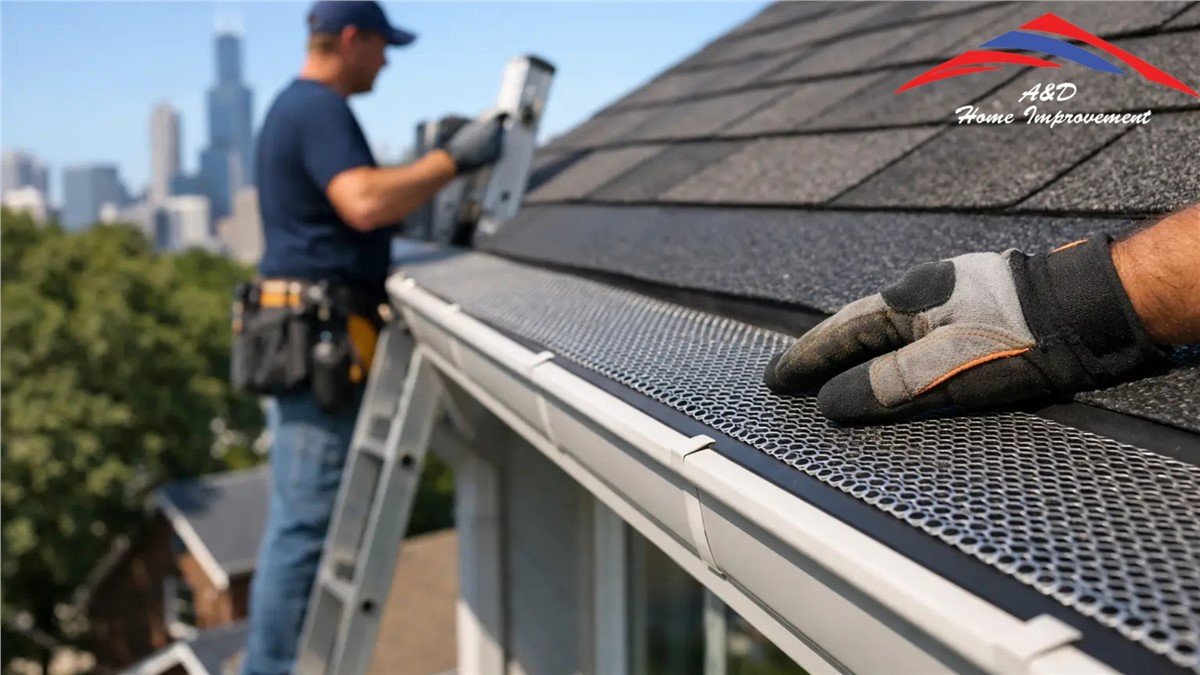
Next comes proper fitting. Guards need to be cut and secured so they sit tightly along the gutter run, including corners, end caps, and areas beneath roof valleys. Gaps may allow leaves to enter, while an incorrect angle can affect water flow. Fasteners, support points, and transitions around downspouts all need attention because small installation details can determine whether a system stays secure after a winter storm.
A final water-flow check is one of the most valuable parts of the job. It confirms that runoff enters the gutter rather than overshooting the front edge, that water moves toward the downspouts, and that the discharge area is not sending water back toward the foundation. This practical testing provides more confidence than a guard that simply looks neat from the driveway.
Chicago Weather Makes Details Matter
In the Chicago suburbs, gutters face more than autumn leaves. Ice and snow can add weight to the roof edge and gutter system. Strong wind can drive debris into openings. Hail and wind events may damage gutters, downspouts, fascia, or roofing materials at the same time. After a severe storm, it makes sense to inspect the entire exterior rather than treating the gutter as an isolated component.
Gutter guards can reduce debris buildup, but they do not eliminate the need for periodic visual checks. Homeowners should look for water spilling over the gutter during heavy rain, staining on siding, loose sections, or debris collecting at roof valleys. A quick inspection in spring and after major storms can catch an issue before water reaches vulnerable areas of the home.
Ice dams are another separate concern. Guards do not cause ice dams, and they cannot solve attic heat loss or inadequate ventilation. If ice repeatedly forms along the eaves, the home may need an assessment of attic insulation, ventilation, and roof conditions alongside the gutter system. Addressing the source of uneven roof temperatures protects the home more effectively than relying on a gutter accessory alone.
When Guards Make Sense and When Repairs Come First
Gutter guards are a strong fit for many homes, particularly properties with mature trees, difficult roof access, recurring clogs, or gutters that require frequent cleaning. They can reduce maintenance demands, help maintain consistent water flow, and limit the risk of overflows that stain siding or erode landscaping.
However, guards should not be used to cover failing gutters. If gutters are rusted, visibly bent, undersized for the roof, or poorly attached, replacement may provide better value. Likewise, if downspouts terminate too close to the home, extensions or improved drainage should be part of the plan. The best installation protects the complete water-management system, not just the horizontal gutter run.
For commercial properties and multi-unit buildings, access and drainage capacity deserve added consideration. Larger roof sections can move significant volumes of water, and a blocked downspout can affect entryways, walkways, landscaping, and building foundations. A professional evaluation helps property owners prioritize repairs and choose a guard system suited to the building's scale.
Protect the Investment With the Right Contractor
A dependable contractor should explain what the existing system needs before recommending a product. Ask whether the gutters will be cleaned and repaired first, how guards will be secured, how roof valleys and corners will be handled, and what workmanship warranty applies. Clear answers are a sign that the work is being planned around performance, not just speed.
A&D Home Improvement helps Chicago-area homeowners evaluate gutters, guards, roofing, siding, and related exterior conditions as one connected system. That broader perspective is valuable when drainage concerns overlap with aging gutters, storm damage, or roof-edge repairs.
The right gutter guard installation should leave you with more than cleaner gutters. It should give you confidence that the next heavy rain has a clear route away from the parts of your property that matter most.
Subscribe to A&D Home Improvement's Blog