After a hailstorm, the obvious question is usually the right one: what does hail damage look like? The problem is that not all storm damage is dramatic. In many cases, a roof can look mostly intact from the ground while the shingles, flashing, gutters, or siding have taken enough impact to shorten the life of the exterior system and create insurance-related concerns later.
In the Chicago suburbs, that matters. Our weather puts roofing, siding, gutters, and windows through repeated freeze-thaw cycles, wind exposure, and heavy summer storms. When hail hits an already aging exterior, even minor-looking marks can turn into leaks, granule loss, and premature wear. Knowing what to look for helps you act early, document the damage, and avoid paying for a much larger repair down the road.
What does hail damage look like on different materials?
Hail does not leave the same signature on every surface. The size of the hail, wind direction, roof slope, material age, and installation quality all affect the result. That is why a proper exterior inspection looks at the full system, not just the shingles.
Asphalt shingles
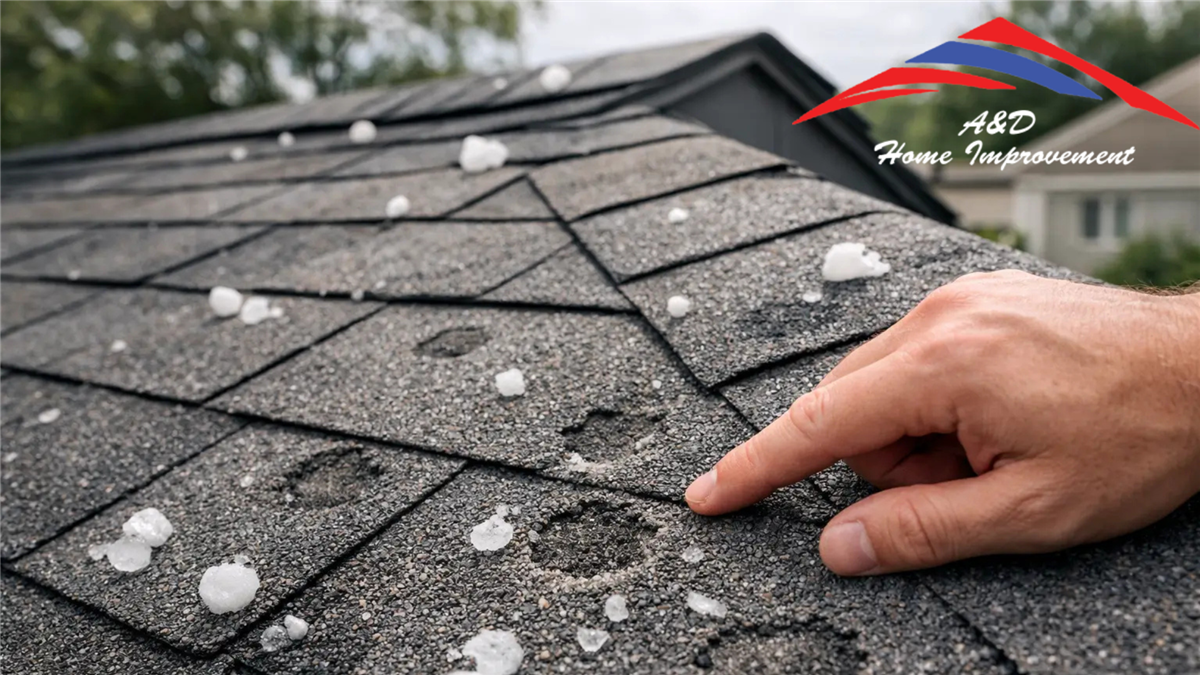
On asphalt shingles, hail damage often appears as dark spots, bruised areas, or places where the protective granules have been knocked away. You may also see small circular impact marks that feel soft to the touch. A damaged shingle can look slightly shiny or black in one spot because the asphalt mat is more exposed after the granules are stripped off.
Not every scuff is hail, though. Blistering, foot traffic, manufacturing variation, and normal aging can create marks that look similar from a distance. The difference is usually in the pattern. Hail damage tends to appear more randomly across slopes that took the brunt of the storm, while age-related wear is more uniform.
Architectural shingles
Architectural shingles can be harder for a property owner to read because their texture hides impact marks better than older 3-tab shingles. In many cases, the signs show up as localized bruising, split matting, or fractured areas where the laminate layer has been stressed. If the storm was severe, the shingle edges may also show cracking.
This is one reason professional inspections matter after a storm. A roof can look acceptable from the driveway and still have impact damage that affects long-term performance.
Metal roofing, flashing, and vents
On metal, hail damage usually looks like dents or dimples. You may notice these on roof vents, flashing, ridge caps, metal trim, gutters, downspouts, and soft metal accessories. These areas are useful because they often show impacts clearly, even when the shingles are harder to evaluate.
Some dents are cosmetic. Others matter more because they indicate the storm had enough force to damage less visible areas too. If the impacts are widespread on soft metals, there is a good chance the rest of the roof system needs a closer look.
Siding
Hail damage on siding often shows up as chips, cracks, punctures, or small round marks. Vinyl can split or break, especially along edges. Fiber cement is tougher, but strong hail can still leave chips or fractures. Painted surfaces may show impact spots where the finish has been knocked off.
The side of the home facing the storm is usually where the damage is most visible. That said, swirling wind can create inconsistent patterns, so one elevation should never be the only area checked.
Gutters, downspouts, windows, and screens
Gutters and downspouts often show dents first because they are easier to see from the ground. Window screens may have torn mesh or small punctures. Window trim can show chipped paint, and in severe cases glass can crack. If your screens, aluminum wraps, or outdoor fixtures are clearly hit, your roofing and siding deserve the same level of attention.
The most common signs homeowners notice first
Most people do not identify hail damage by climbing onto the roof, and they should not. The first clues usually show up around the property. Granules collecting in downspouts or at the bottom of gutter runs can point to shingle impact. Fresh dents on mailbox tops, AC fins, metal fascia, or garage doors can suggest the hail had enough force to damage other exterior surfaces.
Inside the home, the warning signs are different. A new water stain on a ceiling, damp attic insulation, or a musty smell after a storm may mean the damage has already progressed from impact to moisture intrusion. At that point, speed matters more than certainty. Waiting to see if it gets worse can make a straightforward claim or repair much more complicated.
What hail damage does not always look like
One of the biggest misconceptions is that hail damage always means holes in the roof. In reality, many storm-damaged roofs have no visible punctures. The impact may simply weaken the shingle surface, loosen granules, or bruise the mat underneath. The roof can still shed water for a while, but its service life may be reduced significantly.
Another misconception is that if a neighbor filed a claim, your property must have the same damage. Sometimes that is true. Sometimes it is not. Roof age, tree cover, slope direction, and material type all change how the storm affects each structure. Good decisions come from inspection results, not assumptions.
Why hail damage is easy to miss from the ground
Distance hides detail. Shadows, roof pitch, and darker shingle colors can mask bruising and granule loss. On top of that, many damage marks are visible only at certain angles or when touched by someone trained to distinguish storm impacts from normal wear.
That is especially true on older roofs in Illinois. A roof that already has years of weather exposure may show a mix of age, foot traffic, and hail-related damage. Sorting that out takes experience. It also takes documentation, especially if an insurance claim may be involved.
When to get an inspection
If you experienced a hailstorm with noticeable impacts on cars, screens, gutters, or outdoor furniture, it is smart to schedule an inspection even if your roof is not leaking. The same goes for any storm followed by new interior stains, missing shingles, or visible dents on exterior metal components.
Timing matters. A prompt inspection helps establish a clear link between the storm event and the observed damage. It also gives you a better chance to handle repairs before water intrusion, mold growth, or decking deterioration turns a storm issue into a broader restoration project.
For homeowners and property managers, there is also a practical side. A documented inspection creates a clearer path for maintenance planning, budgeting, and insurance conversations. If no storm damage is found, that is valuable too. You get peace of mind and a professional assessment of the current condition of the exterior.
What a professional inspection should cover
A thorough hail inspection should evaluate the roof surface, soft metal components, flashing, gutters, siding, trim, windows, and other exposed areas. It should include photo documentation and a clear explanation of whether the marks are functional damage, cosmetic damage, age-related wear, or a combination of issues.
That distinction matters. Functional damage can affect water shedding, structural integrity, or manufacturer-backed performance. Cosmetic damage may still be worth addressing, but it is a different conversation. The best inspection is not alarmist and not dismissive. It is precise.
For a full-service exterior company like A&D Home Improvement, that broader view is important because storm damage rarely stops at one component. A roof issue may be tied to gutter deformation, siding impacts, or compromised flashing. Looking at the entire envelope leads to better repair decisions and stronger long-term protection.
If you suspect hail damage, avoid these mistakes
The first mistake is waiting too long because the damage does not look severe. Hail damage can be subtle at first and still lead to expensive problems later. The second is relying only on a quick visual check from the lawn. The third is assuming every mark means full replacement. Sometimes a repair is enough. Sometimes the age and condition of the system make replacement the smarter investment. It depends on the extent of damage, the remaining life of the materials, and what will provide the best value over time.
It is also wise to avoid anyone offering instant answers without a full inspection. Storm restoration should be handled with the same care as any major exterior project - clear documentation, quality materials, certified installation standards, and a plan that protects both the property and the budget.
If you are still asking what does hail damage look like, that usually means it is time for trained eyes on the property. Storm damage is easiest to manage when caught early, documented well, and addressed with materials built for the realities of Chicagoland weather. A careful inspection now can protect your roof, your siding, and your confidence in the home for years ahead.
Subscribe to A&D Home Improvement's Blog