A Chicago winter can turn a small siding weakness into a costly repair by spring. The most common signs of failing house siding are easy to overlook from the driveway, but they can allow wind-driven rain, melting snow, and pests to reach the structure behind your walls. Catching damage early helps protect your home, preserve curb appeal, and give you more control over the scope and cost of the project.
9 Signs of Failing House Siding
1. Cracks, chips, or holes in the panels
A single crack may look cosmetic, especially on vinyl siding. In the Chicago suburbs, though, repeated freeze-thaw cycles can cause a small opening to spread. Cracked panels also give moisture a path behind the siding, where it can damage sheathing, insulation, and framing without being visible indoors.
Inspect areas near landscaping, downspouts, decks, hose connections, and the lower courses of siding. These locations often take the most impact from lawn equipment, hail, snow removal, and standing water. A few isolated damaged panels may be repairable if a matching product is available. Widespread cracking usually points to an aging system that deserves a replacement evaluation.
2. Warped, buckled, or loose siding
Siding should sit flat and secure against the exterior wall. Panels that wave, bow outward, pull apart at seams, or rattle in the wind should not be ignored. Warping can result from heat exposure, improper installation, moisture behind the siding, or normal material aging.
The cause matters. Vinyl can distort when installed too tightly or exposed to concentrated heat reflected from nearby windows. Fiber cement and engineered wood can also move when flashing, fasteners, or clearances are incorrect. A professional inspection can determine whether the issue is limited to a section or whether underlying moisture is creating the movement.
3. Fading color that makes the home look uneven
All exterior materials fade eventually, particularly on elevations that receive strong afternoon sun. But severe or uneven fading is more than a curb-appeal concern. It often signals that the siding has reached an advanced stage of weathering and may be becoming more brittle.
If one side of the home looks noticeably duller than the others, repairs can be challenging because new panels may not blend well. Homeowners sometimes choose full replacement at this point to restore a consistent appearance and upgrade to a more durable, low-maintenance material.
4. Peeling paint, blistering, or frequent repainting
For wood siding and painted fiber cement, peeling paint is one of the clearest warnings that moisture management needs attention. Paint protects the surface, but it cannot compensate for failing caulk, damaged flashing, or water entering from rooflines and window openings.
Blisters and bubbling paint may mean moisture is trapped beneath the finish. If you are repainting the same areas every few years, do not assume a better paint job is the answer. The source of the moisture should be identified first. Otherwise, fresh paint can hide the problem temporarily while wood deterioration continues behind it.
5. Soft spots, rot, or crumbling material
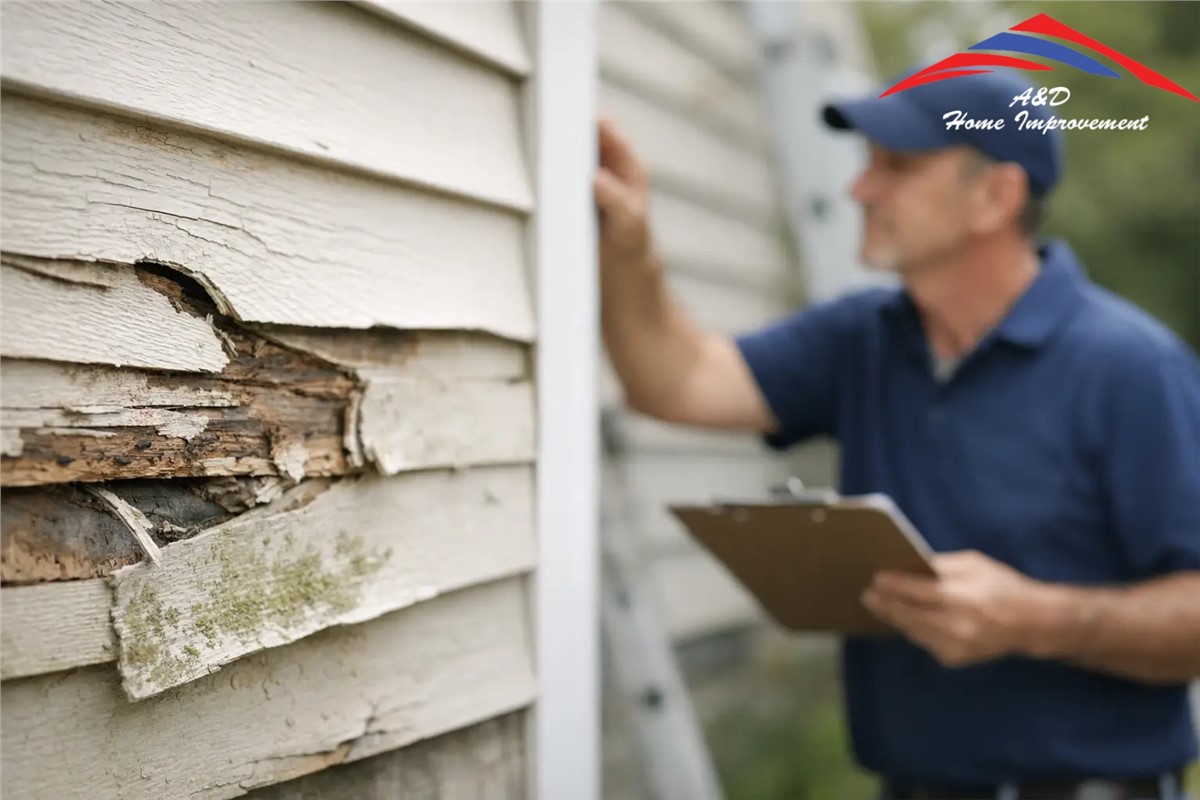
Press gently around suspicious areas, especially near the bottom edge of siding, beneath windows, around doors, and where rooflines meet walls. Soft wood, crumbling trim, or siding that gives under light pressure often indicates rot. This requires prompt attention because decayed material can spread to the sheathing and framing.
Fiber cement does not rot like wood, but it can still show deterioration if it was installed without proper clearances from roofs, soil, decks, or masonry. Any material that stays wet too long will eventually create a maintenance issue. Correcting the drainage or flashing problem is just as important as replacing the damaged siding.
6. Mold, mildew, or unexplained stains
Surface mildew on a shaded wall can sometimes be cleaned safely. Persistent dark streaks, green growth, or stains that return quickly are different. They can indicate poor drainage, clogged gutters, missing kick-out flashing, or moisture trapped behind siding.
Pay close attention to staining below roof intersections and around gutters. A gutter overflow can repeatedly soak a wall and shorten the life of otherwise sound siding. Before replacing panels, make sure the roofing, gutter, and drainage systems are directing water away from the home as intended.
7. Higher energy bills or drafty rooms
Siding alone is not insulation, but a failing exterior wall system can contribute to comfort and energy problems. If rooms feel drafty, cold near exterior walls, or unusually hot in summer, there may be gaps in the siding, housewrap, insulation, or window and door trim.
This is one of the signs that requires a closer look rather than a quick visual judgment. Rising utility bills can have several causes, including attic insulation, aging windows, or HVAC performance. When siding replacement is needed, it can be an ideal time to evaluate the wall assembly and improve energy efficiency where it makes sense.
8. Insect activity around exterior walls
Carpenter ants, termites, and wood-boring insects are attracted to damp or decaying wood. Small holes, sawdust-like debris, insect trails, or unexplained activity near siding and trim can be a sign that water damage has created a favorable environment.
Not every pest issue means the siding has failed, and pest treatment may be necessary before repairs begin. Still, replacing compromised wood without addressing moisture entry can invite the same problem back. A complete exterior assessment should identify damaged sections and the conditions that allowed them to deteriorate.
9. Loose caulk, failing trim, or gaps around windows and doors
Caulk is a critical finishing detail, not a permanent fix for major siding problems. When it shrinks, cracks, separates, or is repeatedly added in thick layers, water can enter around windows, doors, corner boards, and penetrations.
Gaps in trim may also signal movement in the wall system or improper installation. These details deserve attention because the areas around openings are especially vulnerable to water intrusion. Quality siding replacement includes correct flashing and weather-resistant barriers behind the visible finish, not just new panels on the surface.
When Repair Makes Sense and When Replacement Is Smarter
A repair can be a practical choice when damage is limited, the rest of the siding is in good condition, and compatible replacement materials are available. For example, a few hail-damaged panels or a localized issue near a gutter may not require a full replacement.
Replacement becomes the better long-term value when damage is widespread, moisture has affected multiple elevations, color matching is no longer realistic, or the siding is nearing the end of its expected service life. It may also be the right choice when you want to improve the home’s appearance, reduce ongoing maintenance, or address insulation and weatherproofing at the same time.
Material selection should reflect your goals and budget. Vinyl siding offers an affordable, low-maintenance option with many colors and profiles. Fiber cement provides a premium appearance and strong resistance to fire, pests, and weather when installed to manufacturer specifications. Engineered wood can deliver a warm, traditional look with durable finishes. The best fit depends on the home’s architecture, exposure, maintenance expectations, and investment horizon.
Why Chicago-Area Homes Need a Thorough Siding Inspection
Illinois weather places siding under year-round pressure. Summer heat, winter cold, hail, high winds, heavy rain, ice dams, and rapid temperature changes all test the exterior envelope. Damage can begin at a roof-to-wall transition, window opening, or gutter overflow and show up later as a siding issue.
A thorough inspection looks beyond visible panels. It should evaluate trim, flashing, soffit and fascia connections, gutters, drainage patterns, caulking, and signs of hidden moisture. If storm damage may be involved, documentation can also help homeowners understand whether an insurance claim is worth pursuing.
For homeowners who see more than one of these warning signs, waiting rarely makes the situation simpler. A&D Home Improvement can provide a clear exterior assessment and explain whether targeted repairs or a full siding replacement offers the best protection for your home. Addressing the source of water and weather exposure now can help you protect the rooms, structure, and investment behind the siding for years to come.
Subscribe to A&D Home Improvement's Blog