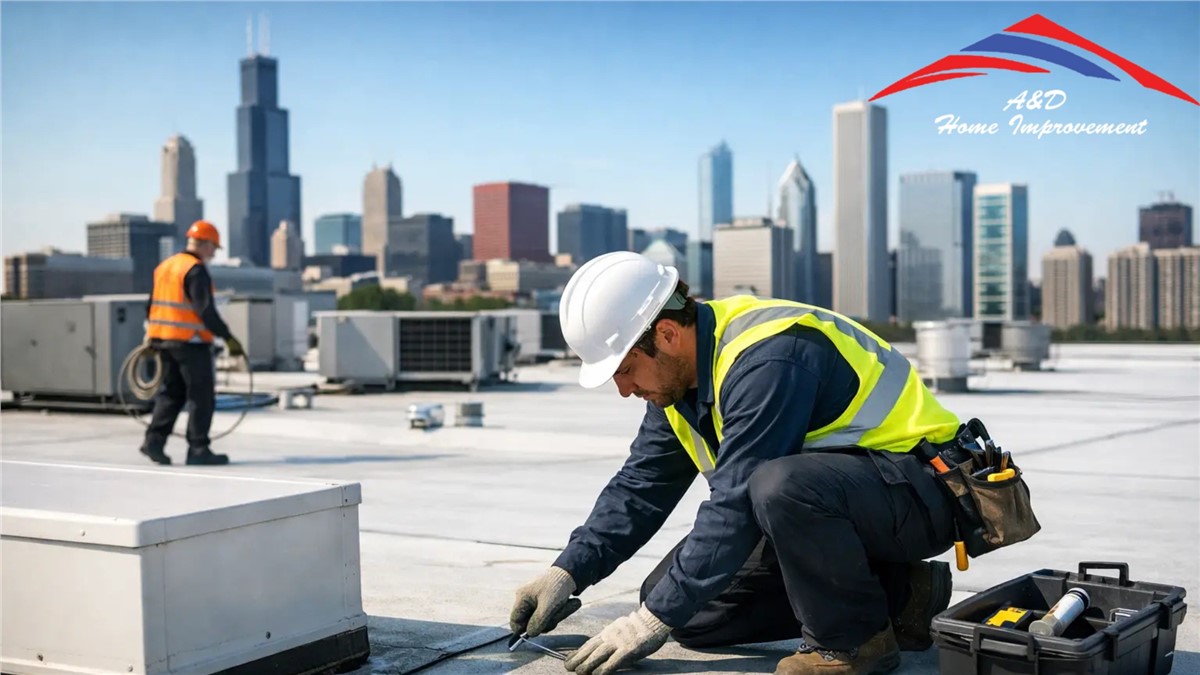
A small roof issue can become a business interruption quickly in the Chicago suburbs. A blocked drain, lifted flashing edge, or failed pipe boot can allow water beneath the roofing system long before a ceiling stain appears. This commercial roof maintenance guide helps property owners and managers build a practical plan for protecting their building, occupants, inventory, and budget through Illinois weather.
Commercial roofs are substantial investments, but they are not maintenance-free. Snow loads, freeze-thaw cycles, wind, hail, standing water, rooftop foot traffic, and summer heat all place stress on membranes, seams, flashings, and drainage components. Consistent attention is usually far less expensive than emergency repairs or an unplanned replacement.
Why Commercial Roof Maintenance Pays Off
The most visible benefit of roof maintenance is leak prevention. The greater value is protecting everything below the roof: insulation, electrical systems, finished interiors, equipment, tenant spaces, stock, and daily operations. Water can travel along a roof deck or structural member, so the spot where it enters is often nowhere near the stain that eventually shows up inside.
A documented maintenance program can also support warranty compliance. Many commercial roofing manufacturers require regular inspections and prompt repair of damage caused by foot traffic, debris, or unauthorized penetrations. Neglecting small defects may give a manufacturer or insurer reason to question a later claim.
There is no single schedule that fits every property. A low-slope roof shaded by mature trees needs more frequent debris removal than an open warehouse roof. A building with HVAC equipment and frequent service traffic needs closer attention around walk pads and penetrations. Still, most Chicago-area commercial properties benefit from professional inspections twice a year, plus inspections after major wind, hail, or snow events.
Commercial Roof Maintenance Guide: What to Inspect
A professional inspection should be systematic, not a quick walk across the roof. The goal is to identify vulnerabilities while repairs are still contained and affordable.
Drainage and standing water
Drainage is one of the highest priorities on low-slope commercial roofs. Check roof drains, scuppers, gutters, downspouts, and strainers for leaves, gravel, nesting material, and construction debris. Water that remains on a roof for extended periods can accelerate membrane deterioration, expose weak seams, and add unnecessary weight to the structure.
Ponding water does not always mean the roof has failed, but it does deserve evaluation. The cause may be a clogged drain, settlement, insufficient slope, compressed insulation, or an undersized drainage system. The correct repair depends on the cause. Simply patching the wet area without correcting drainage can lead to recurring problems.
Membrane surfaces, seams, and flashings
Whether your building has TPO, PVC, EPDM, modified bitumen, metal, or another commercial system, inspect the surface for punctures, open seams, cracks, blisters, splitting, loose material, and areas of exposed reinforcement. Pay particular attention to transitions, perimeter edges, corners, and areas where one material meets another.
Flashing details deserve close inspection because they protect the most vulnerable transitions on the roof. Curbs around HVAC units, skylights, parapet walls, vents, drains, and pipes can all become leak points when sealant breaks down or membrane material pulls away. Small openings at these locations can admit significant water during wind-driven rain.
Rooftop equipment and service traffic
Commercial roofs often support HVAC units, exhaust fans, solar equipment, satellite hardware, and other mechanical systems. Every service visit creates a risk of punctures, displaced flashing, loose fasteners, or damage from dropped tools. Equipment contractors may be excellent at their trade without being roofing specialists.
Use designated walk pads where routine equipment access is required, and make sure every contractor understands that roof penetrations must be properly flashed by a qualified roofing professional. New conduit, mounting brackets, or equipment supports should never be treated as a minor afterthought.
Interior warning signs
Roof inspections should include the building interior. Check ceilings, upper walls, insulation, mechanical rooms, and areas around penetrations for staining, dampness, peeling paint, odors, or mold. Also watch for changes in indoor humidity or unexplained energy costs, which can point to wet insulation or air leakage.
When an interior issue appears, document its location and date immediately. Photographs and notes help a roofing contractor trace the source and can be valuable if storm damage leads to an insurance claim.
Build a Seasonal Maintenance Plan
Chicago-area roofs face very different conditions throughout the year. Planning inspections around those conditions helps prevent predictable problems.
In spring, clear winter debris, inspect drains, look for damage from ice and snow, and check flashing after repeated freeze-thaw cycles. Spring is also a good time to evaluate areas that held water during snowmelt.
During summer, inspect for heat-related membrane movement, deteriorated sealants, storm debris, and hail damage. After a strong thunderstorm or high-wind event, arrange a prompt inspection even if there is no active leak. Hail can bruise or fracture certain roofing materials in ways that are not obvious from the ground.
In fall, remove leaves before they block drains and gutters. Confirm that rooftop equipment, edge metal, and flashings are secure before winter wind and snow arrive. This is the season to address minor repairs that would be more difficult to complete in freezing temperatures.
In winter, monitor for ice buildup at drains, scuppers, and roof edges. Avoid sending untrained staff onto snow-covered roofs. Improper snow removal can puncture a membrane or damage flashing. If snow accumulation appears excessive or uneven, consult a qualified professional who can assess the roof safely and protect the system during removal.
Keep Clear Records of Every Inspection and Repair
A roof maintenance file makes better decisions possible. Include the roof system type, installation date, manufacturer information, warranty details, inspection reports, photographs, repair invoices, and a record of storm events. If your building has multiple roof sections, label each area clearly so maintenance history does not become confused.
This record can reveal patterns. For example, repeated repairs near the same HVAC curb may indicate a detail failure that requires a permanent correction, not another temporary patch. It also gives property managers useful documentation for budgeting, ownership transitions, warranty service, and insurance discussions.
A simple maintenance log should record these items:
- Inspection date, weather conditions, and the person or company performing the work
- Drainage conditions, including standing water and debris removal
- Damage found at seams, flashings, penetrations, edges, and equipment curbs
- Repairs completed, materials used, and photos before and after work
- Recommended next steps, expected timing, and budget priorities
Know When Repair Is Enough and When Replacement Makes Sense
A repair is often the right choice when damage is isolated and the roof system remains structurally sound. Open seams, localized punctures, damaged flashing, and small storm-related defects can frequently be repaired without replacing the entire roof. Acting early matters because water intrusion can saturate insulation and spread beneath the membrane.
Replacement becomes a more practical option when repairs are frequent, leaks recur in multiple areas, insulation is broadly wet, the membrane has reached the end of its service life, or the roof no longer meets the building's operational needs. A commercial roofing evaluation should consider more than the visible surface. The roof deck, insulation, drainage design, perimeter details, energy performance, and expected occupancy all affect the right recommendation.
The lowest upfront price is not always the lowest long-term cost. A well-designed system with proper insulation, drainage, certified installation, and strong warranty coverage may cost more initially but reduce repair exposure and improve energy performance over time. Financing options can also help owners address a necessary project before roof damage creates a larger expense.
Choose a Qualified Local Commercial Roofing Partner
Commercial roof maintenance requires experience with low-slope systems, manufacturer specifications, safety practices, and local weather conditions. Ask prospective contractors how they document inspections, handle emergency leaks, protect warranties, and coordinate with HVAC or other rooftop service providers. Request clear photos, straightforward repair options, and written explanations of what is urgent versus what can be monitored.
For property owners in the Chicago suburbs, A&D Home Improvement provides commercial roofing assessments and exterior solutions built for demanding Midwest conditions. Certified installation practices, quality materials, and clear communication help turn roof maintenance from a recurring uncertainty into a manageable property plan.
The best time to schedule a roof inspection is before water reaches the interior. A focused visit after the next seasonal change or major storm can give you a clear picture of your roof's condition and the confidence to address small concerns on your terms.
Subscribe to A&D Home Improvement's Blog